






Tour operators say Cuba tours are running, but clients are wary
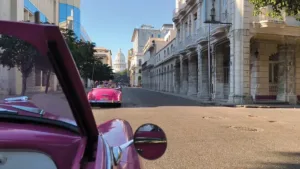
Several tour operators that serve the U.S. market reported they have not faced major issues with itineraries in Cuba. Photo Credit: Cultural Island Travel
Recent headlines may paint a grim picture of Cuba’s tourism sector, but tour operators said they don’t fully capture the reality on the ground.
A nationwide energy shortage caused by the U.S. blockade of Venezuelan fuel exports to Cuba prompted Canadian airlines to halt flights to the Caribbean island and several European nations to warn travelers of potential travel disruptions.
But as of mid-February, several tour operators catering to the U.S. market said they have not faced major issues operating itineraries, reporting that restaurants and hotels use generators for power and that ground transportation for tourists is operating as usual.
And while Cuban aviation officials have said airlines cannot refuel in-country, that should not impact American airlines, which can refuel in the U.S. due to its proximity to Cuba, according to Shabi Samoohi, the director of Cultural Island Travel and The Sicily Experience.
Samoohi said Cuba tourism has faced a lot of misinformation leading to cancellations and a drop in business of anywhere from 25% to 30% for the company.
The operator, based in Queens, N.Y., in early February brought 50 travelers to Cuba for a jazz festival. The group size was originally 80, but more than two dozen passengers canceled their trips.
“People were just afraid there wouldn’t be enough [fuel] — they kept hearing there were so many blackouts and that cars weren’t running,” Samoohi said. “And that was not true.”
Another departure date in March is still a go, and as long as flights and transportation on the ground are operating, “We’re going to keep going,” she said.
Chad Olin, the owner of Cuba Candela, a Miami-based operator, said last week that his company works directly with Cuba’s private sector, which has been “significantly insulated” from problems the public tourism sector is facing. The operator has not canceled departure dates for February or March.
“Many of our travelers don’t even notice that there’s a fuel crisis right now,” he said, but clients are questioning if they should travel to the country at this time.
However, Olin added, the uncertainty of Cuba travel is actually a draw for some.
“This is a historic moment right now,” he said. “For the adventurous travelers, they want to be there, specifically now.”
To boost traveler confidence, Cuba Candela introduced a money-back guarantee if the operator cancels the trip due to the current issues, including if any U.S. regulations change Americans’ ability to travel to the country. This emphasizes the operator’s confidence in leading trips there and reduces traveler risk, Olin said.
Local community affected
Cuba operators are no strangers to disruption. Shifting U.S. policy toward the island, the Covid pandemic and Hurricane Irma have all weakened tourism to the country over the last decade. The country saw record tourism in 2018 when it welcomed 4.8 million visitors, but only 1.8 million visitors came last year, according to UPI.
Marcel Hatch, who lives in Havana and founded Cuba Explorer, said last week that negative press has slashed business by 70% to 80% since the U.S. military captured Venezuelan president Nicolas Maduro in early January.
“The headlines are what’s killing the industry,” Hatch said. “The infrastructure to support visitors is still in place, and the government gives it priority in terms of allocations of resources.”
For locals, he said, the fuel shortage is causing problems, such as blackouts of up to eight hours a day in his neighborhood, an issue Cuba also experienced prior to the fuel blockade. Garbage is beginning to pile up, he added, and the vibrant street culture of Cuba — one of the country’s defining characteristics — has quieted some.
But there is no social unrest, and Americans are welcomed with open arms, said Jesus Noguera, who has led tours in Cuba for almost 20 years and lives in Havana, adding that tourism providers are delivering the standards visitors expect.
“The private sector is working under very tough and hard circumstances, but it’s working,” he said. “The businesses are running. You go to a restaurant in Havana, they have a generator. Taxis are on the street. People are living normal lives, as normal as it could be due to a time of crisis.”
Source: Travel Weekly

MORE NEWS




SUBSCRIBE TO OUR NEWSLETTER
TTC News

WE ARE IN SOCIAL NETWORKS