






Caguanes National Park: Sighting of the endangered Cuban black hawk
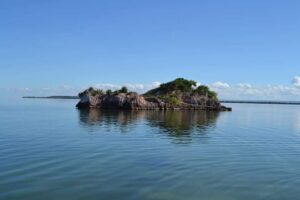
About 30 kilometers from the city of Yaguajay, in the province of Sancti Spíritus, lies a place that seems frozen in time: Caguanes National Park. Its territory encompasses portions of land and sea, more than 10 caves, and a system of keys and islets known as Cayos de Piedra.
However, what is most striking for many visitors and nature experts are its rock formations, shaped over centuries by water erosion. Instead of white sand beaches, there are cliffs and mangroves that create a unique ecosystem.
Caves such as Cueva Grande and Cueva de Los Chivos boast archaeological evidence of the area’s indigenous peoples, including Taíno pictographs. The caves also served as a refuge for privateers and smugglers during the colonial era, adding a touch of legend to the place.
Biodiversity in its purest form
Recently, a new sighting of the endemic Cuban black hawk (Buteogallus gundlachii), considered an endangered species due to habitat loss, was confirmed in the protected westernmost area of the park, according to the Cuban News Agency (ACN).
The agency reports that the sighting was made at La Espinita farm, where more than 90 bird species have been recorded, including both native and migratory birds.
Caguanes National Park is also home to endemic species such as the Cuban flower bat (Phyllonycteris poeyi), and migratory birds that rest in its wetlands. It is also a breeding ground for pink flamingos, which can be seen in the Guayaberas Swamp.
Despite its richness, the park remains largely unexplored. According to researchers from the Institute of Ecology and Systematics in Havana, some areas still lack detailed studies, making it an ideal destination for travelers seeking more than just photos for social media.
What to do in this nature reserve?
While other Cuban national parks, such as Viñales or Topes de Collantes, receive thousands of visitors each year, Caguanes remains a relatively unexplored corner of the world.
To get there, the most practical option is to stay in Yaguajay or Remedios and hire a local guide. There is no extensive tourist infrastructure, only nature trails and boats for exploring the mangroves. Excursions include:
• Trekking through caves and forests
• Birdwatching on the keys
• Boat trips around Buenavista Bay
If you’re looking to get off the conventional tourist trail, the effort to visit this park is well worth it.
The Naturaleza Secreta (Secret Nature) project, focused on revealing Cuba’s natural treasures, visited the park’s Cayos de Piedra. In one of its reports, the area is thus described:
“The Cayos de Piedra of Caguanes National Park, along with Los Ballenatos, within Nuevitas Bay, one of the natural outlets to Jardines del Rey, differ from the rest of its cays and those of the various sub-archipelagos of Cuba: they are small hills of limestone rocks, with a flat and low relief above sea level, but much older, with a longer geological and natural history.
“But those who can truly feel like they are in Paradise while in Caguanes’ Cayos de Piedra are geologists and speleologists, especially the latter: the traces left there by water, creating its art in the carbonate rocks, and then life, taking advantage of the stunning cavities and secondary formations, undoubtedly make Caguanes National Park a place that every naturalist would want to check off their list.”
Source: Sol de Cuba

MORE NEWS




SUBSCRIBE TO OUR NEWSLETTER
TTC News

WE ARE IN SOCIAL NETWORKS