
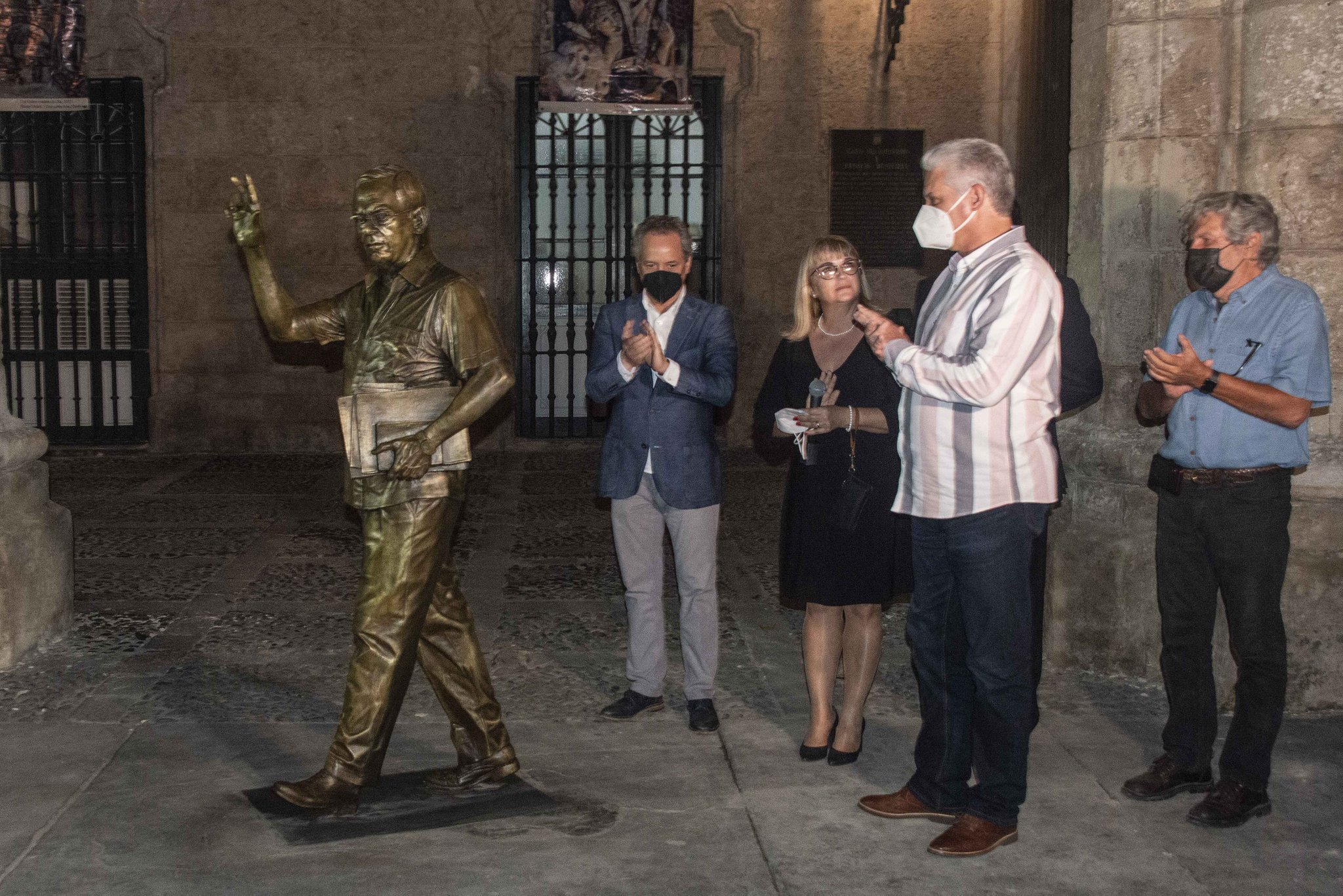
Eusebio Leal and a city that looks at art with a vision of the Future and contemporaneity
Loyal to Eusebio Leal — always a supporter of things being out on the street and that only that what was strictly necessary be locked up — and also to the place where 37 years ago the Biennial was born in the Historic Center, the Cuban event of the visual...

 This time, the 14th edition of the Havana Biennial — inaugurated on November 12 — will last almost six months, until April 30, 2022, and will be divided into three stages: Experience 1: Preamble; Experience 2: Havana of the Biennial; and Experience 3: Return to the Future.
According to the organizers, Preamble will take place between November 12 and December 5 of this year. The second stage, Experience, entitled Havana of the Biennial, will take place from December 6, 2021 to March 24, 2022, in which Cuban art will play a leading role. And finally, Experience 3, Return to the Future, will serve as a link, dialogue and closure of the previous two; it will be made up of various projects and a curatorial exhibition that will take place mainly in the Cuba Pavilion and the Linea Cultural Station between March 25 and April 30, 2022.
Since opening day, the theoretical sessions of the first stage or experience of the Biennial were held until this Saturday in the Cuban Art building of the National Museum of Fine Arts, a space to reflect on art and its decolonizing role.
This time, the 14th edition of the Havana Biennial — inaugurated on November 12 — will last almost six months, until April 30, 2022, and will be divided into three stages: Experience 1: Preamble; Experience 2: Havana of the Biennial; and Experience 3: Return to the Future.
According to the organizers, Preamble will take place between November 12 and December 5 of this year. The second stage, Experience, entitled Havana of the Biennial, will take place from December 6, 2021 to March 24, 2022, in which Cuban art will play a leading role. And finally, Experience 3, Return to the Future, will serve as a link, dialogue and closure of the previous two; it will be made up of various projects and a curatorial exhibition that will take place mainly in the Cuba Pavilion and the Linea Cultural Station between March 25 and April 30, 2022.
Since opening day, the theoretical sessions of the first stage or experience of the Biennial were held until this Saturday in the Cuban Art building of the National Museum of Fine Arts, a space to reflect on art and its decolonizing role.
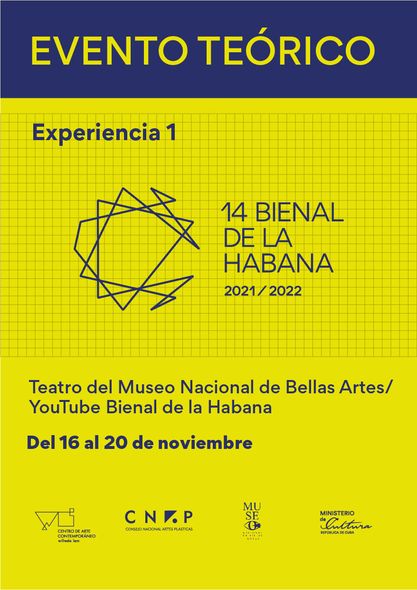 In tune with the alternatives that art has found in the current pandemic context, the panels have had a hybrid character, merging in person with various digital platforms.
With views that deal with art in times of crisis, the meetings are organized by the National Council of Plastic Arts, the Wifredo Lam Contemporary Art Center and the Faculty of Arts and Letters of the University of Havana.
One feature that has characterized the Biennial is not being exclusively a space for the exhibition and promotion of art, rather, it has also been an opportunity for critical thinking and for bringing together different ways of thinking about art.
Since its foundation and throughout its history, the event has evolved to transcend the traditional spaces that art has always had (museums, galleries) to reach the urban space; and it has even gone a step further: it has left Havana to reach other Cuban cities such as Pinar del Río, Cienfuegos, Trinidad, Sancti Spíritus, Camagüey, Holguín and Santiago de Cuba.
Thanks to the sponsorship of multiple Cuban institutions such as the Ministry of Culture, the National Council of Plastic Arts, the Office of the City Historian and the Wifredo Lam Contemporary Art Center, among others, the Havana Biennial has maintained its periodicity since its first edition in 1984.
In tune with the alternatives that art has found in the current pandemic context, the panels have had a hybrid character, merging in person with various digital platforms.
With views that deal with art in times of crisis, the meetings are organized by the National Council of Plastic Arts, the Wifredo Lam Contemporary Art Center and the Faculty of Arts and Letters of the University of Havana.
One feature that has characterized the Biennial is not being exclusively a space for the exhibition and promotion of art, rather, it has also been an opportunity for critical thinking and for bringing together different ways of thinking about art.
Since its foundation and throughout its history, the event has evolved to transcend the traditional spaces that art has always had (museums, galleries) to reach the urban space; and it has even gone a step further: it has left Havana to reach other Cuban cities such as Pinar del Río, Cienfuegos, Trinidad, Sancti Spíritus, Camagüey, Holguín and Santiago de Cuba.
Thanks to the sponsorship of multiple Cuban institutions such as the Ministry of Culture, the National Council of Plastic Arts, the Office of the City Historian and the Wifredo Lam Contemporary Art Center, among others, the Havana Biennial has maintained its periodicity since its first edition in 1984.